Does Monetising Your Art Kill Creativity?
For many artists, makers, musicians and creatives, there comes a moment when a difficult question arises:
What happens when money enters the equation?
Does turning your passion into a business damage the thing that made you love it in the first place? Or is earning money from your creativity simply part of becoming a professional artist?
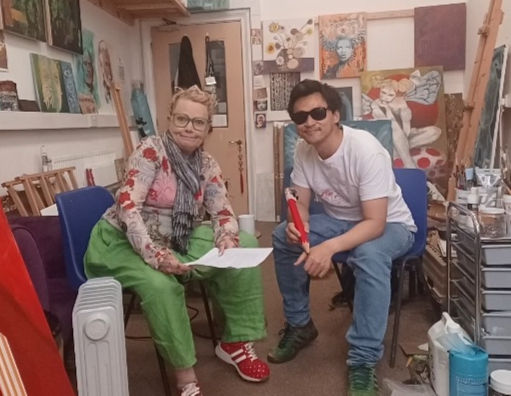
These were some of the questions I explored recently with artist David Lau on my podcast.
Creativity Before Commerce
One thing David and I had in common was that creativity was always present in our lives long before money became part of the conversation.
David recalls winning a school-wide Christmas card competition while still in secondary school. His design became the school's official Christmas card that year. Yet despite the achievement, nobody suggested that artistic talent might lead to a career.
That experience highlights something many creatives encounter. Society often celebrates artistic ability while simultaneously treating it as less valuable than subjects that lead directly to traditional careers.
Schools measure maths and science with clear right and wrong answers. Art is more difficult to quantify. As a result, many talented young creatives grow up without seeing art as a viable professional path.
In my own case, creativity was encouraged by my mother, who had won a scholarship to art school herself but was persuaded to pursue a more practical career instead. Looking back, I suspect she encouraged my artistic ambitions partly because she never had the opportunity to follow her own.
The First Time Money Appears
For many artists, the first sale or commission creates mixed emotions.
David described selling wearable art on T-shirts and gradually becoming more focused on making art a full-time career over the last couple of years.
But earning money from creativity often feels different from earning money elsewhere.
A plumber charges for their expertise without questioning it. Artists, however, frequently feel emotionally attached to their work. Selling a painting can feel like selling a piece of yourself.
This emotional connection creates internal conflicts:
Am I charging too much?
Am I charging too little?
Am I forcing my work onto people?
Does selling my art somehow make it less authentic?
These thoughts are incredibly common among creatives.
The Emotional Weight of Commissions
During our conversation we shared experiences of creating work connected to loss and memory.
I spoke about completing a commissioned pencil portrait of two deceased family members from separate photographs. The responsibility felt enormous. It wasn't simply a drawing; it was part of somebody's grief and remembrance.
David had a similar experience when someone asked him to draw a pet that had passed away. What began as a personal creative exercise unexpectedly became a sale when the owner wanted to purchase the finished piece.
In both cases, the artwork carried emotional significance far beyond its financial value.
Perhaps that's why artists often struggle with pricing. The value isn't measured purely in hours worked or materials used. It includes emotional investment too.
Why Artists Fear "Selling Out"
Many creatives worry about becoming too commercial.
We've all seen artists who seem to produce work purely because it sells. Paint flowers because people buy flowers. Paint boats because maritime scenes sell well.
There is nothing inherently wrong with that approach, but many artists feel uneasy about creating solely for the market.
David described a fear of becoming a creative version of Del Boy from Only Fools and Horses — constantly adapting his work to whatever someone requests.
The concern isn't whether he could do it.
The concern is whether he wants to.
For many artists, maintaining creative freedom is more important than maximising income.
That doesn't mean refusing all opportunities. It means finding the balance between artistic integrity and financial reality.
Finding Your Own Balance
The truth is that there isn't a single correct way to navigate creativity and commerce.
Some artists love commissions.
Others prefer exhibitions.
Some sell originals.
Others create workshops, experiences or educational opportunities.
The important thing is understanding what feels right for you.
Art doesn't have to exist outside of economics, but neither should economics completely dictate what you create.
The challenge isn't choosing between creativity and commerce.
The challenge is maintaining curiosity, experimentation and authenticity while earning enough to continue making work.
That's a balancing act every artist must learn for themselves.


Comments